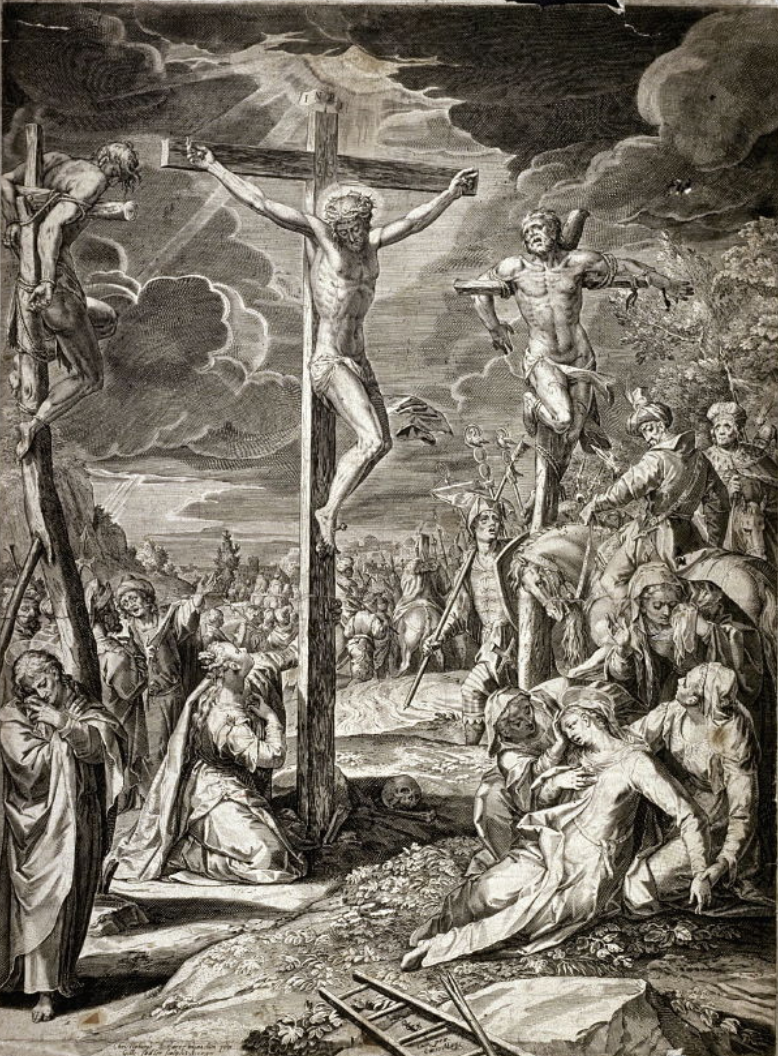
Thursday, October 18, 2018

The Gospel as Tao: Acceptance as Pu, and Apostles of Now

Under the Influence has long taught that “logos” is the equivalent of the chinese character “mu.” In other words, Logos is paradox, purposefully maintained so as to break our addiction to logic and awaken intuition.

This asks an important question, though. If Logos is paradox—the unresolved tension between speaking and silence—then what is the gospel, and how do we proclaim it?

The post New Thoughts on Evangelization has reminded us of the Church’s ground rules: The gospel is lived first, then preached verbally only when someone asks. Some religious communities go even further than that: the little brothers and little sisters of St. Charles de Foucault purposefully take menial jobs, and may not even tell you about Jesus when you ask.

The point, as the post said, is that "life itself preaches.” This has been a belief in the background of Under the Influence for as long as it’s existed. So I’m sort of surprised that the following statements have taken this long to formulate. The day they occurred to me, I wrote them in BIG LETTERS across my mind: THE GOSPEL IS PU. WHEN IT’S PROCLAIMED, IT’S THE TAO. [bxA]

The Tao Te Ching was written by Lao Tzu, who might have been a composite of three people, the most notable of whom might have been a 4th Century record keeper in the Chinese province of Chou. As is supported by the Tao’s focus on good governance, Chou might have been disintegrating politically. The story goes that Lao Tzu wrote the Tao in lieu of paying a tax to cross a bridge at the province’s border.

The combination of Taoist and Buddhist philosophies is what gave the world Zen Buddhism. Zen has a focus on “trying not to try,” which comes directly from the Taoist concept “wei wu wei” or “doing not doing.” The emphasis in wei wu wei is egolessness, not sedentary living. In describing wei wu wei, Taoist scholars often use the analogy of the athelete who’s so proficient that his ego drops away in mid-high jump. Under the Influence, in “Biff, Kapow, Thwap: A Study in Contemplative Attention” spoke of “passive volition.” This “being present to reality without ego" is an absolute correlation to wei wu wei.

Proclamation of the gospel is the Tao. My old mentor Chrysogonus fascinated me by telling me that, when the Gospel was translated into Chinese, “the Way”—the name for early Christianity—was translated as “Tao” and Christians were called “followers of the Tao.” It blew my little twelve year old mind.

What the Gospel proclaims is Pu, is reality, is the body of Christ. When a Christian says “Here I am” he is in harmony with how things are. His perfect acceptance would be acceptance of that thing Taoism calls “Pu.” Pu is the uncarved block. It is “things as they are.” Loss of life, loss of all feelings of communion with the Father, the feeling of his nails in his hands—all these things were ok, ultimately, because they were reality. Incarnations are dualist, so for a minute let’s be dualist and remember that reality is one of the Five Sense Organs of the Body of Christ mentioned in the Under the Influence post a couple weeks ago. It’s one of the ways God perceives us, and we, him. All that a Christian is saying is Pu, it's “how things are,” and how things are” is all a Christian is saying.

A few weeks ago, Under the Influence claimed that the first of four humble truths of Christianity is “All life is abstraction.” Even further back, Under the Influence improvised around Zen categories and outlined what happens in cognition during Contemplation and Obedience: in short, a still mind was said to be remaining at the “first theonoia” or "God thought.” A mind imposing separate labels like “Self” and “God" was at the second, and a mind weaving theories and philosophies was at the third. Under the Influence’s claim was that “Remaining in Jesus” was a matter of stilling the mind till it rests in the first theonoia. Under the Influence further said that the abstraction of the second theonoia was what made God give us “garments of flesh”—first egos, then physical incarnations. The posts took pains to remember that, with all their potential for harm, egos and bodies were a mercy: tools to return to resting in God.

The Gospel, proclaimed, is the Tao. Taking catechetical cues from Buddhism, Under the Influence suggested that “Acceptance” was the 3rd Gospel Seal—the third thing that all Christian teaching must agree with to be Christian. In the background of that post were the voices of realized beings like Maharaja-ji who turned to Ram Dass one day, remarking on the evil in the world, and said “can’t you see it’s all perfect?” Jesus was the ultimate tantric teacher. He could take the energy even of suffering and transmute it into energy of life.

Of course, we should get nitty gritty here for a minute and tackle some ways that seems not to be true. Jesus healed the sick. Wasn’t that changing “the way things are?” Jesus accepted death at the hands of his oppressors. Shouldn’t oppressed people accept their oppression and death as “the way things are?”

Hang on, because blindness is part of a larger game, and (to counter Chicago’s Chance the Rapper) Jesus’ Black Life did, in fact, matter. Jesus healed the “Man Born Blind” because it was part of that man’s purgatorial predicament to be one of those healed by Jesus, to show forth God’s power. (To digress, Ram Dass and others theorize this is one of the places in the new testament that the early Judeo Christian belief in reincarnation is in the background. When Jesus’ disciples ask “who sinned, this man or his parents, that he should have been born blind?” they’re presupposing a previous life in which the man’s purgatorial predicament could have set up “blindness as part of the next round’s purgative dance.”)

When oppressors tell the oppressed they should accept their mistreatment, it’s the second theonoia wielding its warped ego action. Jesus’ death and resurrection was completely and totally possible because he remained egoless. To be nailed on the cross was to remain at the first theonioia: he experienced his suffering willingly as suffering and it became part of his transformation. He experienced thirst as thirst and it became part of his transformation. For oppressed communities, the gospel move is to do what Shaolin Monks do in Kung Fu, what Gandhi-ji did in India: to sidestep the oppressor’s energy, continuing it on its way, and to accept and televise the oppressors denied violence until sheer dint of truth forces him to face it.

For a long time now, regardless of anything linguists would tell you, when Under the Influence said “Logos” it meant “paradox, mu.” Now, when Under the Influence says “Gospel” it means “Pu.” When Under the Influence says “Evangelization” it means “Tao.” I don’t mean to theologically equivocate here, merely to recognize in the words “Logos,” “Gospel,” and “Evangelization” the same functions as Mu (with its paradox), Pu (with its immanent perfection) and Tao (with its "speaking to what is”).

When a Christian says “Here I am” he’s proclaiming that “Here everything else is” he’s recognizing things as they are. It’s the prayer of the man who goes before God, simply as himself, whose only words are those of total acceptance. Most of us think we have to get our ducks in a row before going to God. The student of the Way has the simplest words on his lips. They’re the inner meaning of any prayer spoken from an egoless space: to wit, "This is what I’ve got.” Whatever comes out of our mouths, may it forever be saying just that.

Thursday, October 11, 2018

Family, Faith and Foundations: Part 2 of 2

IV.

Gramps was buried in Westford, and Granny died in Atlanta. So transporting her ashes would be challenging. Human remains were hell to send through the mail.

Since I’d driven down from North Carolina, I was the only person in Atlanta who absolutely had to drive to the funeral. Everyone else had the option to fly. So it was ultimately decided that I would road trip the ashes back home to Vermont. The family even paid for new tires for my car, taking the money out of Granny’s estate.

My family called it the “Highway to Heaven” tour. They were playing on the 1980 TV show by the same name, in which Micheal Landon played an angel. Privately there were jokes about me befriending overweight truckers along the way, and snapping photos with both them and my Grandmother’s urn of cremains. Publicly, as always, we Warners were less cheeky.

I left the next day. I don’t remember a single moment of the trip, until I crossed the Vermont state border. Then I remember almost every second of it. I remember the feel of the wind as I drove. I remember the look of the trees, which seemed poised, despite the warmth, to begin changing color and dropping their leaves. [bxA]

In the town next to Westford, there’s a funeral home run by the Minors, an old Westford family. Stephen Minor, the owner, met me when I arrived. The Minors and the Warners were never terribly close, but I remember a story about the older siblings of the two families: they used to play tetherball together. Steve Minor had a dog named Penny, and she, too, did her part in the tetherball games. She would jump up and bite the tetherball as it passed, then hang on and sail around in a circle. This provided no end of enjoyment for those involved.

Steve Minor had a kind face, and a warm smile. Just knowing this small story made me feel as if I was arranging a reunion of Westford’s old guard. “Is this Irene?” he asked, as I handed him the box containing her urn. I nodded, and he took it gently, saying “We’ll take good care of her.” And I believed him.

I got back in the car. I had other stops to make.

I remember what it felt like to drive past the covered bridge. This town was home, although I’d never lived here. I drove to the corner on which the General Store stood.

The General Store was run by Kevin and Suzie Kerns. Back when Suzie Kerns was Suzie Poulliot, she used to babysit my father and his siblings, literally going along on family vacations to help with the care of all 10 Warner kids.

I didn’t know this at the time, and Kevin and Suzie have the reserve typical of New Englanders. So we didn’t exchange many words. I bought a swisher sweet cigar and a Diet Coke. After my Aunt Kim arrived, she made sure to stop in and see the Kerns. From her I’d eventually learn that, as I was walking up to the store, Kevin turned to Suzie and said, “Well, I know he’s a Warner. I just don’t know who he belongs to.”

That was the first time in my adult life that I’d been recognized, by a stranger, as a member of my father’s family. To come back to the seat of the entire family narrative, and be recognized, on sight, as a part of it, affected me profoundly.

That was, of course, after reflection. For the moment I was standing there in the Westford General Store with relative strangers. I paid for the swisher and the soda, and set my sights to where my grandfather was buried 13 years before. I didn’t go to the funeral, and had never seen his gravestone. As his wife was about to be buried by his side, I thought, it was high time to do so.

Graveside, I did three things. For Granny, I prayed a rosary. The family had given me the beads she died holding, and those were the beads I used that day. For Gramps, I lit up the swisher, blowing the smoke on his grave because I figured he missed the smell. For me, as I’d been driving most of the day, I downed the diet coke in record time, grateful to feel a bit more awake. One of the old women of Westford stopped by to express condolences as I was standing there, making clear the town’s awareness of the passing of one of their own.

The days leading up to the funeral were full of reunions. My Pop and his siblings began to trickle in, and stories long relegated to memory came out of their mouths, easy as exhalation. The townswomen put on a covered dish supper and everyone came. I met the Larsons of my generation who were still in town, and noticed that one of my grandfather’s paintings still hung on the walls of the Red Brick Church, long ago converted to a meeting hall.

My last act as transporter of Granny’s ashes was to bear the urn down the main aisle at the start of her funeral. To this day I am proud to have seen that task through to its end.

Funerals are heavy anyway, but I felt again the need to lighten up as the funeral progressed. Earlier on I’d returned to Kevin and Suzie’s, and bought a new pack of Swishers. I had them in my pocket at the funeral. As Granny’s ashes were being interred, I passed the pack around on the sly to uncles and aunts, all of whom recognized Gramp’s brand and drew out a stogie with a smile.

I fished through my pocket for my lighter, and had it in my hand as I made the final Sign of the Cross. Before long, Aunts, Uncles and Cousins were all incensing the graves with a scent that forever held Gramp’s memory.

What I didn’t know is, as I was road-tripping with Granny’s ashes, my Aunt Kim was getting in touch with the family who lived in the old Warner homestead. They were generous enough to invite every one of us, with apologies for the mess, to come by after the internment.

So, with the stubs of Swisher Sweets in many of our mouths still, we travelled to the house. They’d cut down the Crab Apple tree that whomever was sleeping in the second floor bedroom could use to sneak out of the house. And they’d filled in the swimming pool into which my uncles and aunts used to jump from the first floor roof that extended over the deck. So the house had lost some of its capacity to incite mischief. But even as I walked through the kitchen, I knew that all of the pipes had been laid by my grandfather. In the corner of the living room, at one point, the family had kept a television. Its life was cut short the day my Pop came into the room screaming “CAPTAIN KANGAROO” as the program was starting. He felt, for some reason, compelled to deliver a high karate kick to the air, after which gesture his shoe came off, flying into the television and breaking it. Suffice to say, the family’s past was everywhere.

After the funeral, the family dispersed. I drove back to South Bend long enough to do laundry, en route back to Mepkin for a longer stay. After my encounter with Westford, South Bend, and indeed every town I drove into, was different. After that trip I knew where I’d come from. I’d helped my Granny come to rest. And, more than I had before the journey, I knew who I was. I was a Warner. I’d been the courier. And I would become, in my own way, a custodian of the fragment of family story that I’d learned over those days.


V.

I returned to the Monastery with grieving to do. At this point I was what they called an observer: someone who has declared an interest in joining the community. As such, I’d been assigned a director, a priest named Fr. Feliciano. Monasteries are tremendous at helping people to mourn, for those willing to see that there’s grieving to. The routine, and its monotony, simultaneously supports the one living it and leaves no distraction between a man and his emotions. The monks used to say “In a monastery, if you’re struggling, you can get through it by simply living the routine.” I found this to be true, but I also found living it richer and harder to bear than I’d anticipated.

It’s said that two of Jesus’ disciples, after his death, initially fled Jerusalem in despair. They came upon, and began travelling with, a stranger, to whom they revealed their disappointment that Jesus had not risen as he said he would. As they walked toward the town of Emmaus, their conversation wandered onto interpretation of the Torah, and the stranger’s comments were insightful enough to impress the disciples. Later, as the three dined, the stranger blessed the bread and broke it. The gesture so poignantly brought back the memory of their deceased Rabbi that the disciples literally felt the stranger to be Jesus himself. So they began to proclaim him risen all over Galilee.

I’ve said before that Granny and Gramps were the key to my faith being more than pie-in-the-sky stories. In fact, I think the story of Emmaus is literally true, and I think that because something similar happened to me.

In the monastery, grief took up temporary but real residence in the center of my chest. I was constantly tense, for reasons it took years to attribute to grieving, but reasons which were a mystery at the time.

I talked about this with a few monks. For one, I spoke about it with Br, Vincent, one of Mepkin’s blessed eccentrics who would become, by and by, one of my closest friends there. I told him the story of Granny’s Westford funeral, of incensing the graves with the smoke of Swisher Sweet Cigars.

“Oh hey,” Vince said “I should have guessed that a man as classy as your grandfather would smoke cigars. Come with me.”

I followed Vince. He guided me to his room, a cluttered thing with every inch of wall space covered in posters, some of which were homemade. He fished around in his desk drawer and produced a swisher sweet cigar. He said “Next Sunday, I want you to take a stroll around the farm. Smoke this cigar, and remember your Grandparents.”

I was stymied. “Vin,” I said, “How is it that you even have this?” Shouldn’t these be impossible to get in here?”

Vincent grinned “I suppose they should be hard to get, but they’re not. Often the monks have friends who bring them gifts when they come to visit. If you went through the rooms of some of us old guys you’d find many of them have whole drawers full of cookies. Some of the monks keep back a little bit of ‘unaccounted-for’ money, so as to go out for cheeseburgers when they’re out at the dentist without turning in a receipt for it and tipping off the powers that be. It can have its pitfalls…Mepkin’s black market could be a way for, say, an alcoholic monk to get his hands on a bottle. That’s happened in a couple of cases at some of the other Trappist houses. But usually its more innocent than that. So everyone knows it goes on, and everyone looks the other way.”

Mepkin Abbey, then, that vanguard of holiness, had a black market. This knowledge was delicious to me, but it aggravated my bad case of the scruples as well. Being in possession of contraband was something that my neophyte conscience couldn’t bear to keep from my director, so when I next met with Fr. Feliciano, I told him I had it. I was lucky on two counts. For one thing, he didn’t ask me to reveal my source. Additionally, he didn’t ask me to surrender it. The whole thing seemed entirely unsurprising to him.

“You should smoke it slowly.” Fr. Feliciano said. “Be deliberate, and make it a prayer.”

So it happened that I partook of a contraband swisher. On this walk I admitted to myself that throughout the funeral, I’d held myself together, at least in part, by force. I’d gotten through Granny’s death on a mix of caffeine and adrenaline. Given the energy denial takes, merely admitting this relaxed me. This presaged my realizing that the cycle of overwork and burnout could eclipsed generosity for me, but it would be years before that concretized.

Out of the blue, on that walk, I found myself talking: to no one, at first. And the words were all about exhaustion. Then I heard myself address him:


“Gramps,” I said, “I don’t know where to go. I don’t know how to balance all the things I need to balance. I don’t know how to be generous. And I don’t know who I am, or how to live my life well. Please help me. Please help.”

The words rolled out calmly, when they came. And it may be that Gramps really wasn’t there. He didn’t appear to me. But neither had the words been there, the ones I really needed to say, until I said them to him. That prayer, I decided, was proof of his intercession.

I need to diverge a bit and describe something about Granny, because it’s important to understanding the conclusion of this story. Granny had a particular smile, and something she’d say when she was trying to express astonishment. The smile had notes of feigned haughtiness in it: she’d move her head back over her shoulders and stick out her chest a bit. And she always said the same words: “How ‘bout that?”

I say this because later, I narrated the whole stogie walk for Fr. Feliciano. I ended saying “So, in the end, I feel a lot better, thanks a lot.”

“Ah,” he said, “God works in mysterious ways. How ‘bout that?”

Something happened at this point, something difficult to explain. When Feliciano said “how ‘bout that?” he squared his head over his shoulders and stuck out his chest a bit. And when he spoke the words, I was suddenly aware that I was not looking at Feliciano anymore. I was looking at Granny. I suppose I didn’t see her the way my Uncle David saw Gramps. But I was as certain of her presence as I was of my own. If it is possible to see with something other than my eyes, in that moment I most certainly saw Granny. At that point, the immediate grief of Granny’s death was easier to bear.

At one point in the Gospels, Jesus reveals to an adulterous woman that he knows about her 5 husbands, that nothing she’s done shocks him and that he won’t reject her for her choices.

The woman goes to a neighboring town and relates the incident to the people. They invite Jesus to remain with them for a few days, and by the end of their time with him, they say, “We no longer believe because we were told. We have seen and believe that you are the Messiah.”

I no longer believe because I was told. I believe because I have seen. I believe because an old, stogie chomping construction worker started making house calls when his kids needed it. I believe because, even as I am writing this, he is helping me find the words. I believe because his wife was a gentle, story-rich presence and still is.

Gramps created a family symbol, one he made into medals. When he married Granny he gave her a medal, and when she died the medals were given to the grandkids. I never took mine off. The medal’s hole was only large enough for a thin chain, though, and those broke, so I lost my family medal. This was towards the end of my monastic life, during the period when my relationship with the monastery was shifting. I briefly discussed it with the abbot. Perhaps he saw my departure from the monastery as the writing on the wall, because I made a suggestion, and for whatever reason, he gave his blessing.

In any case, some months later I went into town for a doctor’s appointment, and stopped by a tattoo parlor to have the family symbol tattooed on my right forearm.

In the Jewish confession of faith, it says “take to heart these words which I enjoin on you today. Drill them into your children. Speak of them at home and abroad, whether you are busy or at rest. Bind them as a frontlet on your forehead, as a symbol on your arm.”

And again, saint John Chrysostom said something like “Those whom we have loved and lost are no longer where they were. They are now where we need them to be.” When Granny sent that poem she found in my grandfather’s wallet, the one written by my father, her accompanying note asked me to “Remember those who went before [me], and what they gave of themselves.” All of the words, all of the stories, and the evolving sense of who I am, they’re now a part of my embrace. Like those in the stories, by now the words are where I need them to be. Here, now. And by and by, God willing, fully told.


Thursday, October 4, 2018

Family, Faith and Foundations: Part 1 of 2

This is an excerpt from a book I wrote mining my reasons for entering and leaving the monastery.  The following is the first part of one of its Chapters.  The second part will follow next week. 

                                                                *******************

My first car was a 1997 Mercury Mystique. I received it from a retired social worker named Irene Mary Warner, a woman past her driving years, known to her former colleagues as “the Bulldog.” I knew her simply as “Granny.”

Granny raised 10 kids in the small town of Westford Vermont with her husband Walter Warner Senior, himself a contractor by day and a painter by night. 

I need to talk about these two because they’re the reason I have any faith at all. They are the entire reason I know the things of God to be something more than bullshit myths. In many ways, they are the entire reason for this book. 

I.) 

Westford, Vermont is to my family what Jerusalem is to Jews, or Mecca to Muslims. Like other New England towns, Westford’s buildings are gathered around a town common, a large swath of lawn that used to be a field of overgrown grass. And tucked between the houses, my family’s stories have permanent place, as important to the landscape as the Brown’s River at the edge of town, or the covered bridge that, to this day, stretches over it. 

I could tell you about the time my Aunt Noreen strung toilet paper across that covered bridge, causing a car and the boat it was pulling to jack-knife. I could tell you that my Uncle Walt (Walter Junior, the second of three Walters in the family) took the blame for it, and how the truth only came out when Granny was on her deathbed. I could tell you that Walter Warner Senior eventually spearheaded the preservation of that bridge when the roads into town were widened. All of these things are part of the story of Westford, as apparent to me as I drive into the town as Vermont’s Autumn colors. 
It is more important to the story, though, that you know about the family. Granny and Gramps had 10 children: 7 biological, 3 adopted. My father, Steve, was the oldest of the biological children, a group that included my uncles Tim, Brian, David and Walt. My Aunts are Noreen and Karen. After this my grandparents adopted 3 more: my Aunt Kim, from Korea, my Aunt, Nanakoo, saved off the streets of Calcutta by Mother Teresa, and my Uncle Tom, who became permanently estranged from the entire family long before I was born. 

My grandparents would always fill two carts when grocery shopping, and would purchase entire cows at the butcher, only clarifying how said cow was to be carved up. Despite the many mouths to feed, my grandparents always kept space at the table for the many friends my father’s generation brought home. So I grew up knowing many members of that Westford town as a part of the family. 

Particular mention should be made, here, of the Larsons. It was Patty Larson that helped my Aunt Noreen with the stringing of toilet paper. When my grandmother lay dying, Juli Larson travelled to be with us. To me, she’s always been “Ms Juli” as opposed to Aunt Juli. But Mrs. Larson died young, and Ms. Juli found mother figures where she could. So when she entered my grandmother’s hospital room, she took her hand and said “Hi Mom” and Granny recognized her voice, opened her eyes and addressed her by name. Grandkids in the Larson clan recognize my grandmother (calling her “Grandma Warner”) in old family pictures. The closer one is to Westford Vermont, the more negligible the differences between Warners and Larsons. 

The family’s church was St. Luke’s, a white wooden building in the neighboring town of Fairfax that was subsequently converted to a convenience store. After granny died, I stopped in for history’s sake while driving granny’s ashes back to Westford. I had a naughty chuckle or two imagining my family worshipping there, saying things like “Our pew was back by the freezer section.”


II.

To talk about Granny’s death too soon would be to get ahead of the story. I need to talk first about Gramps’ death. He died suddenly in 1991, when I was 12. He’d had a massive stroke in the lobby of the doctor’s office. The news shook my family. The Patriarch, who came to the table shirtless and ate his steaks rare, who managed the construction of headquarters for a generation of Westford businesses, and who painted from his heart, would never roof another house. In life, he’d smoked swisher sweet cigars and he drank just a little too much. 

Gramps was nothing if not honest. In the course of a single Scrabble game, he would cheat (passing his tiles off as blanks by placing them upside-down,) then be unable to bear it and turn himself in. But for years, and more with notes of sadness than anger, all I could remember was that he’d promised to take me fishing, and died before he kept the promise. I am not sure I would even enjoy fishing…but I would go, were it with him. The suddenness of the death struck Granny hardest. She always said, when she saw him again, that she’d scold him for leaving so abruptly. 

Among his possessions, at the end, was a poem my father had written when he was seventeen. Gramps had it in his wallet on the day he died. Granny, knowing my tendencies to wordsmithing, sent it to me. To this day, it’s one of my prized possessions. 

My Gramps, to me, isn’t just among those I count as “beloved dead.” He is the reason I believe in heaven. And I believe this because Gramps came from beyond the grave, saved the life of one of his kids, and reached out to another who needed him. 

My Uncle David used to work in airplane maintenance. The particular plane he worked on was the F16, a plane about which I know next to nothing. And most of the details don’t matter, except to say that F16’s carry bombs. 

On the day when a bomb dropped from the F16 Uncle David was working on, my grandfather was the only reason he was far enough away from the plane to survive. 

Imagine a clock face. On that day, the plane was at my Uncle David’s 12. His tool box was at about 4 o’clock. As the story was told to me, right before the bomb dropped, my uncle was getting a tool, and saw my grandfather standing at his 6. Only when Uncle David had turned completely around and taken several large steps away from the plane did the bomb drop and explode. The experts who studied the accident said his distance from the plane was key to his survival. And his father had drawn him away from the plane. 

I have asked Uncle David about this incident too many times. Once at a family reunion I cornered him with my most burning question. 

“Uncle David” I asked “What do you mean when you say you ‘saw gramps?’” 

He replied “I saw him like I see you.” 

For the sake of the story, I’ll make bold and call this the “Family Miracle.” I suppose I could disregard it as an isolated incident, if similar unlikely events hadn’t happened to other family members. 

For several years, due to problems of addiction, my Aunt Nanakoo was estranged from the family. This was the case in 1991 when gramps died, and so there was no way to find Aunt Nanakoo to tell her that her father had died. After a while, Aunt Nanakoo beat her addictions cold turkey, and my grandmother independently felt the urge to find her daughter. Ever the social worker, my granny used all the skills she had, and found Nanakoo living in Florida, clean and in a stable relationship. Granny made plans to visit. 

When the day of their meeting came, Granny opened with the news that Gramps had died. To Granny’s surprise, Nanakoo already knew. And she hadn’t learned it from a newspaper. She’d fallen asleep in the car one day while Larry, just shy, at the time, of being her husband, was in the supermarket. Gramps had appeared to Aunt Nanakoo in a dream. He’d made it clear that he’d died, that he was with her and that he loved her. She treated those things, upon waking, like the facts they were. 

In one sense, these stories amount to little more than family lore. But when I first heard them, they became the foundation for important reasoning. If Gramps appeared from beyond the grave, I thought, he must have come from somewhere. And if Gramps was the only reason Uncle David was alive, he must be able to answer my prayers as well. So I no longer doubted not only the existence of heaven, and thenceforth believed in the Saints’ intercession. Because, after all, my grandfather was no saint, and without his appearance two members of my family would have followed drastically different paths. A bona fide Saint, I figured, could do at least as much. 

And lets face it, sometimes God is hard to talk to. He’s too big and invisible to avoid this particular pitfall of omnipotence. Shortly after that, whenever I couldn’t talk to God, I started talking to Gramps. I never needed him to appear in my life. I just needed him to listen. It’s a post that he and Granny would come to share.


III.

For a brief stint before entering Mepkin, I had worked as a youth minister in Greensboro, North Carolina. This staging point was most of the reason why I ended up at joining Mepkin. The first monastery a Google search turned up was Mepkin, and for a time, in my life, I saw that as divine providence. So proximity to North Carolina isn’t just why I joined Mepkin, it the reason that, when I would travel from my home in Indiana to the monastery, I would stop off in Greensboro and stay with friends.

I’ve said before that my stays in the monastery grew progressively longer: first a week, as a retreatant, then a month, as a monastic guest, and then three, having made my interest in joining the community known. All of these happened before entering the monastery outright, for what I expected would be forever.

After my month long stint at the monastery, I had just arrived in Greensboro, en-route homeward to South Bend, when I got a phone call from my father. Come to Atlanta, he said: end stage COPD was claiming my grandmother’s life.

Granny moved to Georgia to be close to my Aunts Kim and Karen. Atlanta is a mere six hour drive from Greensboro; while I resided in North Carolina I made it a point to visit her regularly.

Our times together were story times. Granny was not suffering from any form of dementia, but her stories recurred from one visit to the next; I suppose she just knew which stories to entrust to which people, and kept doing it till they stuck.

Granny always referred to Gramps as her “fella.” From the day they married, hard though the commitment was, at times, she never backed down from her love for him. I reckon he should have felt fairly special. You see, Granny’d had a proposal of marriage before meeting Gramps.

He’s known to our family simply as “the tennis player.” Till the day she died, my Granny always remembered two things about the tennis player, without fail: that he was tremendously handsome, and that he used to annoy my grandmother to no end by closing their dates with a singing of “Goodnight Irene.” Granny hated that song. It’s appropriate that, the tennis player’s sport of choice, scorelessness is referred to as “Love:” belting out the ditty that contained her name earned the poor man zero points. I don’t remember a time the song was mentioned in her presence when Granny didn’t visibly cringe.

Ultimately the tennis player became presumptuous, asking my grandmother to type his term papers while he went out drinking. Things like this became a pattern and a warning sign to Granny, and she broke off their engagement.

All of this was water under the bridge, of course, when she met Gramps. He cared for his family immensely. Granny was not surprised to hear that he’d appeared from beyond the grave to Aunt Nanakoo and Uncle David. She had only one enduring objection. She used to smile at us and say “If your Grampy’s making house calls, I wish he’d remember he was married.”

Granny was no stranger to religion. At one point, she had considered converting to Judaism. She always wanted to get at things by their roots, and religion was no different. In the end, she found belief in Jesus to be something she couldn’t abandon. She didn’t shirk religion’s demands, either: it was no small task that she’d guided 10 kids through catechism, even at one point switched churches, citing the priest’s failure to involve lay people in running the parish.

So Granny was unsurprised when I told her about my desire to enter the monastery. She had a way of summing up her feelings in pithy euphemisms, a tendency of which her reaction to me was fine example. She simply said “Well, you’ve picked a hard row to hoe, but you’ve gotta follow your heart. Otherwise, when you look back on your life, all you see is what Paddy shot at and missed.”

On that final trip to Atlanta, I arrived just as Granny was moving from her permanent apartment to her hospice room. What struck me most was her pill case. Granny took a massive number of pills daily, and when she left it behind it was a clear symbol of her willingness to die when it was her time to do so. As they wheeled her out of the room, she saw me eye the pill case. Apparently I looked concerned, because she put her left hand on my arm. With her right she removed the nebulizer mask she was wearing (this was the last time she’d use it.) She looked at the pills, then at me. She smiled and winked, “How ‘bout that? Don’t you worry about me. I’ll be good tomorrow. Today’s high risk.”

When she was fully transitioned to her hospice room, I did notice she’d taken a rosary with her. Over the next four days or so, since I’d just come from a monastery, the family would ask me to lead a rosary several times. I would lay my head against her arm as Granny and I wove through the alternating Our Fathers and Hail Marys. Granny would sometimes reach over with her free hand and stroke my head. She knew, I think, that leading a rosary for the whole family was a heavy responsibility. Not everyone in the family was still Catholic. Some of them had left the church altogether, some had converted to more conservative Christian religions. This phenomenon was Granny’s reason for the name she gave her family. She called us “her motely crew.”

When someone I love is in hospice care, everything stops; their care becomes something for which I drop everything. This would come to serve me well in the monastery, and I would help seven monks through their last days.

In Granny’s case it was a reason to be totally present to her. Over the next four days, each family member had a moment being close to Granny. There were nightlong vigils that consisted of simply listening to granny breathe. Something occurred to me that never had before, and it would come back to me over the many years at Mepkin, working in palliative care. Granny was choosing to take each breath. And during the moments when she’d fall out of lucidity, we all knew she was in intense negotiations with her maker.

It’s said that a person who’s still breathing but not lucid can still hear what’s going on around them. Granny was totally aware of which children were driving to see her. Uncle David and his wife Jeanette were the last to arrive. I am convinced Granny knew they were coming.

She died about an hour later. It happened like this: Aunt Kim leaned in to whisper in her ear. She said “After your funeral, we’re gonna go back to the house in Westford, thank the people who’ve watched it for us since we moved out, but tell them their services are no longer required, and that they can move out now.”

Granny hadn’t been lucid for hours. But when Aunt Kim said what she said, the corners of Granny’s mouth bent up in a smile, then she exhaled a last puffed breath, and died.

Many of us cried when granny passed, but after 4 days of grieving, my entire family was exhausted. We needed what most people need after a catharsis: beer. In relative, tired silence we filed back into cars and ended up crammed, all of us, into my aunt Karen’s kitchen. By and by everyone had a full glass, and we all stood waiting for someone to know what to say.

In a moment of inspiration, I raised my glass into the cloud of silence that hung over the room. I looked around at my family and said “Goodnight, Irene.”

Everyone knew the story. Everyone laughed. I think even the tennis player, wherever he was spending his eternity, got a chuckle out of it.

Thursday, September 27, 2018

Remembrance, heaven and the first theonoia.

Ever since my days in the monastery, when I took his name, I’ve been a devotee of St. Dismas. That classic interaction between the Crucified Christ and the Good Thief—Dismas says “Remember me when you come into your Kingdom” and Jesus responds “Today you will be with me in Paradise.”—the words “Remember me" still make me sit up and listen.

If “Staying with Suspension” has it correct, Contemplation, Enlightenment, humility and “having the mind of Christ are all a matter of remaining at what it calls the "first theonoia,” a place of pure, unanalyzed perception. Normally, we think of memory like it's a mental maneuver that fishes insights or experiences out of the file cabinet of who we used to be-- in the service of who we currently think we are. If such egotism is ultimately a mask we have to get rid of, "memory" has some limitations.

Aspiring to the first theonoia gives the Jewishness of Christianity’s origins a run for its money. Remembrance is absolutely pivotal to Judaism. The answer to the Passover question “Why is this night different from all other nights” begins with the words “we were slaves of Pharaoh in Egypt.” For Jews, Remembrance is a way of actualizing God’s saving potential, an act that gave their lives freedom and law and promise. The Scripture frequently says “Remember, O Lord, your people.” In psalm 25, the poet says “Remember not the sins of my youth.”

This all builds on a single assertion: What God fails to remember does not exist. And it broadens easily. When Dismas said “Remember me, when you come into your kingdom,” he was teaching us that “What the messiah fails to remember is not saved.”

But if past and future don’t exist, if the first theonoia is worth remaining at, the way we throw around the word “remember” needs to be workshopped. Taking everything Under the Influence has said about cognition into consideration, it makes sense to say “Remembering is a dismembering of the Self.

It follows from this that past and future are deconstructed too. The past and the future are about actualizing potential and being grateful. The only reason the passover meal and the eucharist claim to make the past present is to live in accord with God’s will right at this moment. The only reason the future is something to aspire to is because we want to hope in God’s providence, and be grateful for it, in the now. If we can’t do that, then our rumination about past and future become unreasonable attempts at control: we mull over the past and feel anxious about the future. We cultivate expectations about how life should be—sometimes, much to our own dismay, we even call those expectations themselves ‘hope' and it creates myriad resentments. Remembering where I came from, hoping for the future have become excuses for living in remorse and anxiety, for seeing the worst parts of my “self” hemming me in, in front and behind.

So remembrance is a dismembering of the self. But Remembrance, in Jewish thought, leads to heaven. Jesus response to Dismas was “Today, you will be with me in paradise.” Heaven is another concept that needs to be workshopped. In the post “Emptiness in the Life of God: Resurrecting a Concept," I’ve identified Non-being as heaven. It can also be God—whether we mean God as "personal deity", or God as “impersonal ground of being.” Hazrat Inayat Khan, the late 19th and early 20th century sufi teacher wrote "Non-existence Sings with the Song of the Harp. To Him we return.” In this case, Non-existence, which I have Identified with Heaven, is identified as personal—analogous to the higher power. Ultimately, the point is that heaven, at the very least, is living on resources that aren’t self—something bigger and more free than ego and attachment and desire. It’s Nonself, or the Soul, that gets the work done. Non-being, beyond the confines of an incarnation, is heaven.

There’s a Koan that addresses this: case 29 in the Hekiganroku, the second of three famous collections of Koans. It says “A monk asked Daizui “When the Kalpa fire flares up and the great cosmos is destroyed, I wonder, will ‘it’ perish or will it not perish?” Zui said, “it will perish.” The monk said “Then will it be gone with the other?” Zui said, "it will be gone with the other.”

Katsuki Sekida, editor of the collection of koans I work out of, processes this Koan as an understandable attempt to figure out what happens after we die. It is, in essence, three questions: first, it asks if we will be gone. Then it asks if we will be alone when we’re gone. And if we won’t, it asks what will happen to the others.

As is typical of Koans, that’s not all that’s happening. Remember that Koans collapse time. When Daizui answers “Will it be gone” by saying “it will be gone” he’s asking, in essence, why the self that is “us” isn’t gone already. When Daizui answers says it will be gone “with the other” he’s assuring us that “the beyond” is at least an experience of non-self, but we realize too that what we are, with the other, is gone. Nothing of “self or other, here or there" is left for us to cling to. The answer to the Koan, indeed, heaven itself, is the first theonoia. It’s either pure perception in the here and now, or it’s nothing.

If we take the theories of Under the Influence, the Jewish sense of remembering, or the work of Koans seriously, past and future cease to matter because all the potential of the present is actualized. This vision of Heaven accords with the four humble truths of Jesus, mentioned in last week’s post. If heaven is anything, it’s non-being. And the way to get there, in this life, is non-self and the Tenfold Way. When those teachings translate into actual, practical ways to remain at the first theonoia, then what Therese of Lisieux said is true: “All the way to heaven is heaven.” All that’s needed, I suppose, to wake me from my denial, is the deafening hush of one hand, clapping.

Thursday, September 20, 2018

Where we've been so far: The Basic Teachings of Under the Influence

Under the Influence hopes to impart the equanimity of the Messiah. With the Church, Under the Influence considers Christ to be a definitive revelation. If the Church should choose to claim exclusive rights to rectitude, however, Under the Influence will go quiet: when people know who they are, they can let others be a little bit right as well. When people know their liabilities, they dispense with attempts to convert others, and instead they're eager to troubleshoot their own denial.

Knowing the usefulness of their own tradition is, in the end, the very reason people of faith examine the resources of other traditions. Under the Influence reminds the Church of its own words: Nostra Aetate’s claim, for instance, that "The Catholic Church rejects nothing that is true and holy in [Non Christian] religions. She regards with sincere reverence those ways of conduct and of life, those precepts and teachings which, though differing in many aspects from the ones she holds and sets forth, nonetheless often reflect a ray of that Truth which enlightens all men. Indeed, she proclaims, and ever must proclaim Christ "the way, the truth, and the life" (par. 2).  

In other words, if a teaching is the way, the truth and the life, that teaching is Christ, whether it comes from Buddha or Torah or Hanuman. This curiosity to know other faith traditions is an obligatory part of being a Catholic, but being Catholic is a help to salvation at best—by the Church's own admission: Those who, through no fault of their own, do not know the Gospel of Christ or his Church, but who nevertheless seek God with a sincere heart, and, moved by grace, try in their actions to do his will as they know it through the dictates of their conscience - those too may achieve eternal salvation." CCC 847

This is no mere "tolerance:" rather, Under the Influence would have the Church join students of all traditions who have taken their seat at the feet of Wisdom. There may but one path for each of us, but there are certainly many paths for God. We are not Students of the Way until this tension renders us quiet. We have not heard Rabbouni’s voice until he speaks to each one of us alone, about each one of us alone. We are not Students of the Way until we’ve seen that Wisdom is equally accessible to all, and that we need the mirror of others to clearly see ourselves.

Among teaching tools for Wisdom, Koans—driven by paradox, as they are—these have pride of place. In a Koan, the Cosmic Consciousness wields creative tension like a sword: the Divine calls our own consciousness to expand. Koans do certain "transformative work:" they render all places “here,” make all distances nil and all times “now." They render all people “me,” and obscure the lines between hearing and feeling. They make all processes realized, and divorce stimulus from response. They unite opposites—and as such, heal the divisions in the human psyche that began in abstraction, continued in sin, and embedded themselves in cultural deludedness.

So far, this is what Under the Influence has discerned to be true:

God is a person-with-a-nature, not a person-with-a-self: God’s attributes are the closest thing he has to a self. I, too, am a person, not a self. My Ego is a false self. I wear an ego around town, the combined projection of the eight evil thoughts. Due to these mutually donned disguises, God and I are distant. I over identify with ego and attachment. Morality holds sway: some paths are holier than others, heaven above is a remote goal, just as hell below is a fear. I substitute examination for experience. I substitute beliefs for belief. As I move out of denial, through the dark night of the senses and the spirit, I become my true self more and more. In the healthiest of dualisms, we practice the presence of God. Christ has no body but ours, no hands but ours. In the healthiest of dualisms God perceives us through the body of Christ: we see Time, Desire, Reality Thought and Paradox, but through them God sees us. We realize that our “beliefs” about God are largely a system of blame, projection, dualism, superstition and egoism—and that was echoed in the culture: in its own dualism, in its projection of time into past and future, in its moralistic equation of humanity with its actions. We hoped there might be a way to stop abstracting, to cease acting out of the false self. God’s gaze entices us.

At first we asked for a bottom line. And we found an answer in the five pillars of Catholicism: Prayer, Service, Creed, Seasonal Awareness, and the Practice of the Presence of God. After a while, the bottom line became less important. It wasn’t because we’d obtained what we’d desired, but because both the desiring, and the person doing it, diminished in importance.

The Cross, the place of Suspension, is the first Theonoia. It is the logos: symbolized by the serpent, it was with God in the beginning, just in the coded messages of the prophets and the psalms. The Logos is the truth to which the Sacraments point: Though concealed, God is literally present in all creation.The logos asks that broken-heartedness be a permanent reality for us. Humility is the natural tendency to remain at the first theonoia—a place of pure perception once confined to contemplation—and the foundation of Christian enlightenment. Inhabiting suspension empties us of self, and our desire of attachment. God, once distant and accessible only in ecstasies, draws closer as our humility becomes permanent.

As we move from dualism to monism, God sheds his attributes, his self to become the ground of being. No paths are better or worse, they just are. Working out our purgatorial predicament, our disposition alternates between times of serenity, when we feel united to God, and times of anxiety, when we feel distant from him—but the changes aren’t up to us, and have little to do with our desire. As holiness grows, holiness becomes less of a merit badge, and consciousness of sin grows alongside our knowledge of God’s mercy. But we don’t interact with God as a person, the way we did when dualism held sway. Now God is as close as our breath: it’s us who live far from ourselves.

And that is how it was, in the beginning: God and humanity were one. Then it fragmented, thought about existing instead of just being. All life became abstraction.  People were given bodies to learn to return. God sent rabbouni to recapitulate all things, remake all creation in God’s image. His teachings all had the four Gospel Seals: impermanence, non-self, acceptance and interbeing. We were given the Humble Tenfold Way—so that we could gradually embody the lessons of the logos and the teachings of the Cross. And in the end, (perhaps after multiple lifetimes) in the breaking of the bread we see the body of Christ: the strangers we were to ourselves show themselves to have been Christ the whole time.

Divinization is just that, becoming God in unity with our true selves, the Christ within. When we saw it as the end of a moralistic journey, heaven seemed like a reward, where we, at best, sat on clouds with God. Eventually, perhaps after many lifetimes of Christ being reborn in us, we saw it as the end of a journey of humility: heaven was a merging of our own consciousness back into Cosmic Consciousness.

Though Wisdom bucks logic, some concepts support its work better than others. In pursuit of union with God and the Crucified Christ, then, Under the Influence presents these core teachings. Suffering is not understandable or controllable by logical constructs: as such, it’s the perfect mouthpiece of the Logos. However, Under the Influence makes bold to claim that, were the Cross to enumerate its core teachings, these would be them.


The 4 Humble Truths

(On the Doctrine of The Cross, Part 1 and 2)

All life is abstraction
All is in need of recapitulation
The Vehicle of recapitulation is the Body of Christ
The Way of the Body of Christ is the Humble Tenfold Way


The Humble Tenfold Way

(On the Doctrine of The Cross, Part 1 and 2)

You do what you want, but I remember these using this acronym: Practice Perfects In All Eating, So We Knead The Bread.


Humble prayer
Humble presence
humble intention
humble action
humble effort
humble speech
humble work
humble knowing
humble thinking
humble belief


The 5 Sense Organs of the Body of Christ

(On the Doctrine of The Cross, Part 1 and 2)


Monistically, all these things are Christ’s Real presence, union with a God and True-Self in naked reality. Dualistically they’re how God perceives us.  I remember them with the acronym "True Divinization Really Takes Presence"


Time
Desire
Reality
Thought
Paradox


The 4 Gospel Seals

(On the Doctrine of The Cross, Part 1 and 2)

All Christian teachings will agree with these principles. These are the “marks” of Christian Transformation.

Impermanence
Non-self
Acceptance
Interbeing


The 5 Pillars of Catholicism

(The Five Pillars of Catholicism)

These are the 5 things with which every Catholic has to contend. Whether to contend with them is not optional, if we would call ourselves Catholic. How we contend with them is up to us.

Prayer
Service
Creed
Seasonal awareness
Practice of the Presence of God


Spiritual Stages

(On Trendy Brunch Spots and The Dark Night of the Self,
Defining Terms and Filling in Gaps)

Denial
Dark Night of the Senses
Dark Night of the Spirit
Suspension
Dark Night of the Self
Heaven/Divinization

The Theonoias

(Staying with Suspension: Christian thoughts on Wisdom, Cognition and Enlightenment)

1st theonoia: No difference between God and who I AM.  Non theorizing about either of them.  A state of pure perception

2nd Theonoia: Everything gets names and Labels.  Man gets a "garment of Flesh" or an ego. The False Self believes it, and the world, are permanent.  The True Self knows everything "Inter-is" in everything else, that the whole world is just patterns of energy, and people are just patterns of energy wrapped around consciousness.

3rd Theonoia: We string our labels together to get theories and physical laws and rules.


Self:

(On removing self from knowing,
Permanence, Self and Christianity)

Because all life is abstraction, self is synonymous with ego.  It can be, by degrees, healthier and unhealthier.  It is an abstracted identity, the net effect of the eight evil thoughts.  The eight evil thoughts are gluttony, greed, sloth sorrow, lust, wrath, vanity and pride.

The evil thoughts are, first and foremost, expressions of original sin--in that sense, they're universal, more a cause for compassion than anything else.  And only problematic if we willfully and habitually follow them.

Thursday, September 13, 2018

Raising a Glass: Parting with Ego, Celebrating Engagement

Three years ago, when dating Jackie was new, and I lived in an apartment owned by the Eastern Rite Catholic Church next door, she and I fell into a pattern that would become the norm. It’s the “I get up at 7 to write, she sleeps till noon” pattern. She and I have never lacked time for ourselves: I’m a former monk, who used to rise at 2 in the morning to precede Vigils with coffee and writing. She’s a former Amazon employee who courted shift-work disorder—her eight hour work day began at 10 at night. On any given night, when I start getting tired, she breaks out her “me time” coloring book. On any given morning, including this one, coffee gets made and Under the Influence gets written while she sleeps.

I say all this as preface: I've been writing my way, for as long as we've dated, through a transition in my relationship with self.  I've used poems to name its selfishness.  I've written whole tomes on its gradual expansion.  I've gotten indications of what giving it up would look like.  Our growing commitment is as much a story of ego renunciation as it is anything else.

Three years ago, in any case, knowing me to be a bit of a wordsmith, Jackie bought me a magnetic poetry set. I find them generally limited in their ability to stimulate the hoped-for creativity, but there was one morning back then that I, while coffee was brewing and my new sleepy girlfriend was on my mind, pieced together this verse:

“Remember your heart surrounds all universes. You are never less than vast.” The little verse seemed unreasonably profound, given my limited word-choice and compared to my usual total absence of pre-coffee insights. Despite not really knowing what it meant, I kept it. It has remained, despite several moves, on my refrigerator ever since.

Last June, Jackie and I emptied the refrigerator of any food that would spoil and hopped on a plane bound for Dublin, Ireland. My father and his wife live there—Pop is a choir director, my step mom a vocal coach. They live, quite literally, across the street from downtown Dublin’s St. Stephen’s Green, in a historic home that would cost thousands of Euro per month to rent, were it not part of his compensation.

We’d planned a week of tooling around Dublin, with a two-day booking for just the two of us in the suburb called Dun Laoghaire, and a mildly posh hotel. We weren’t just “poised to have good fun.” On every level, and for two reasons, the stakes were higher. For one thing, Jackie’s deceased father had always wanted to take his daughter to Ireland, the land of her ancestors. Also, we’d been talking for a year about the possibility of getting married. I spent about a year saving money for a ring, trying to figure out her ring size, figuring out which to commit to, of the several she said she liked. Sure, we were planning it, and I was planning for it to happen in Ireland, but within that, spontaneity was in order.

When we got to the hotel in Dun Laoghaire, we decided we’d end each night in the hotel pub, with a round or two to celebrate the day. Neither of us were particularly given to drinking or bar-culture. But we'd met in a bar—the Chicago Bear, near midway in Chicago—so one night, after a nice supper in town, we went out on the sparsely populated pub’s vacant patio. Without ceremony—I didn’t kneel, or anything—I asked Jackie to marry me. She said yes.

The engagement trip was perfect—and it’ll be a good story we’ll get to tell for the rest of our lives. Our engagement also means, interestingly enough, that I’m marrying my guru. I wasn’t prepared, that much is certain, for the strength with which that would later hit home.

Some time ago, I made a request of All-Things-Transcendent. It’s one of the few times I am absolutely sure that one of my thoughts had counted, not simply as mental noise, but as prayer. I’ve always been terrified of my ego, in a way that earlier chapters of my life have addressed through overuse of alcohol—not to mention all kinds of manipulative attempts to get my fragile ego’s needs met. Having become, lately, fed up with such constant focus on myself, I faced the statues of Buddha, Hanuman and Jesus on my puja table and made a request: I asked them to help me to cope with my Ego. My run-ins with my false-self began at 18, and now I'm 38, still freak out when it registers that I wear a mask with people. I asked my triad of enlightened guides to help me fully accept my own brokenness. It’s true, I didn’t want ego to mess up my own life, but still less did I want it negatively effecting Jackie’s.

The Gospel and the Dharma colluded with the universe to respond. It took a form I initially didn’t like. I started noticing that I was throwing the weight of my own selfishness around. All over the place. This could be as simple as needing to get past Jackie in the kitchen, and getting annoyed when she didn’t move. “Having a need, and expecting people to know about it without voicing it” is a classic move of my cranky false-self. Each time it happened, I noticed it. I’m gradually becoming more conscious of the need to speak gently. Another frequent stop was “I feel like I’m bearing all the responsibility for something, and I expect you to share it without talking to you about it.” We split the cost of things much more lately, and I've learned to ask for that in a way that minimizes pressure, but at first it was “I’ve been paying X alone for years, and I need help.” Never mind the fact that she pays a number of bills for the both of us too. My ego is pretty adept at ignoring evidence that unseats its entitlement. I was terrified, and it was appalling.

Even without considering Jackie: the voice that objects "She's not affirming me enough" is just a way of deflecting my attention and the blame for my own broken-heartedness, for the tensions of being formed by the logos. Maintaining that tension (in my own life) is my responsibility. I ran from it a bit too much at first. One day, though, I was washing my hands in the bathroom of a Chili’s—the restaurant where many of our relational insights occur, it seems— and it struck me that all of my recent clashes-with-self were the universe delivering on its promise. Before they can be taken from me, my deficiencies have to become as visible to me as they are to others.

When all of this clicked—why I’d been so confronted with myself, and what the universe was doing—I felt I owed Jackie an apology. One Saturday I sat her down—I was wearing the “serious face” way before she was awake enough to deal with it—and I said “I owe you an apology. I spend all of this time on my stupid blog, talking about how illusory 'self' is—I make all this noise about how the past and future don’t exist, that the present is all we have. But as soon as something comes along that I’m attached to, it’s 'I want X, and you never do Y.’ That’s not fair to you: because who am I? How constructive is my attachment to that desire? I’m so busy offloading my egotistical crap on to you, even as I'm not asking myself how I deal with ego and desire in the present moment. Well, I feel like a hypocrite, and I suck. And I’m sorry.”

Some might say, “Jesus, Josh, that’s a pretty heady way to pick apart an argument. Does conflict resolution always have to include such blatant nods to the Dharma?” My response is “Remember, I’m a big nerd. So, um, heck yeah it does.” Ms. Jackie, by the way, cultivates a less intellectual spirituality, but doesn’t hate what she knows to be my spiritual tendencies: much more than I do, she has the patience of Job.

We’ve talked a bit about our vows. We’ll most likely write our own. I haven’t figured out what I want to say yet, but I’ve told her I can at least promise her this: my ego will not run our marriage. The only “outside influence” I want in our relationship is the benevolent third-will that brought us together in the first place—that voice that isn’t mine or hers, but whose ideal for our relationship forms us both. I know I’ll promise to keep my ears open to what it’s trying to teach me.

All of life is a big experiment in what scientific researchers call “the expectancy effect.” What we’re looking for, says the expectancy effect, we generally find. Popular culture usually conflates hope with expectation, but hope is Egoless—the assumptions that rule our interactions are, all of them, eventually harmful— to the exact degree that they don’t square with reality. Expectation is what makes relationships hard, and scientific experiments biased.

I say this because, routinely, the way I look at Jackie is the way she appears. If I am looking at her without acknowledging that ego is coloring my vision, she seems to me to be full of desires and preferences that grate on the nerves for not squaring with mine. If I am looking at her in a way that’s mindful of the distortions of my false-self, the differences grate on me less.

There’s a third option, but I’ll wait to talk about that. For now, suffice to say that the expectancy effect is the way projection works: “My intention’s like glasses that make everybody look like me.”

I’d like to talk a bit about the ways I’ve been able to take responsibility for eschewing my own assumptions. At the outset, an admission: I’ve not had an earth-shattering, spiritual paradigm-shift—or an altered state of consciousness in prayer—for at least a decade. When I talk about growing awareness of spiritual realities, I’m talking fundamentally about processes of slow-reveal. I get pieces here and there. Sometimes they come together—and maybe I level up, but only slightly. The drama’s largely gone out of the spiritual life for me, and that’s ok: it just means that watching the face of God for an eye-twitch is about as interesting as watching the linoleum curl.

Here are some of the pieces that have been lately coming together. In the midst of the clashes I’ve had with ego lately, Ram Dass said something that struck me on a heart-level. He said “You don’t have to listen. You don’t have to try. You just have to be together, and it will all happen.” At the time I was so constantly being bombarded by anxious run-ins with my own selfishness that I clung to this like Titanic passengers do life-preservers. I did all the silly things, like go to the refrigerator and write it on the dry erase board. It was a paradigm that didn’t turn on my own, shoddy efforts, and I needed it desperately.

Jackie and I, on the day of our engagement
I’ve been actively wondering what living would look and feel like if something other than ego ran my life. Driving to work recently, I was listening to an audio book by a man named “Sadhguru.” From a very early age, altered states of consciousness and a variety of samadhi experiences simply began happening to him. He didn’t seek them, they just happened. He says of himself, in a way that manages not to sound egotistical, that he learned the spiritual life completely from experience—that he relies on no guru or particular religious philosophy. To an extent, though his categories are generally Eastern, I trust that he’s telling the truth, that he has learned his lessons from experience. He recounted a spiritual experience in which the boundaries of his self expanded to include the visible world. I was in my car when I heard it, on South Chicago’s 103rd street, near the end of my morning commute. As Sadhguru described his experience, I looked at the traffic, the street, its lights and the horizon, and I thought “What if they’re all me?” For just a second, they were. The message on my fridge had proven true, if only for a moment. “Remember your heart surrounds all universes. You are never less than vast." I had had a brief experience of peace, of what total non-opposition to the world would feel like. Then the car in front of me stopped fast and I snapped back into normal consciousness. I’ve tried to access that space again, and the trying gets in the way of reuniting with it. Sadhguru’s “altered states of consciousness” happened without his working for them. And I’ve long since learned I can’t manipulate providence. As that insight sinks in, if my “self” is becoming larger and larger, I’m trying less and less to know that its happening or cling to the journey’s insights.

There are times, when I am at my most spiritually attuned, that I’ve looked at Jackie, and haven’t see anyone. Sure, her consciousness is present, but her body, and the set of desires that make up her “false self” are nowhere to be found. Surely she’s present to my eyes, but I’m present to her with something other than my eyes. At those times, she is, at most, a mirror of my own selfishness. That is, she’s only solid or permanent to the degree that I’m bouncing my unreconciled desires and drives off of her. Like any insight, or like unfamiliar saviors breaking bread after talking on the road, those insights disappear as soon as they’re beheld. Only if I were more consistently egoless could I sustain that mode of seeing things.

But perhaps even egoless existence could not sustain spiritual awareness. Perhaps we’re all vehicles of higher forces like the Holy Spirit, like the Gospel and the Dharma and whatever spiritual powers of which Ram decides you’d be a useful conduit. If I am blessed with multiple lifetimes, it may take that long for me to be as truly detached from spiritual realities as I claim to be from material ones. Then, perhaps, spiritual insights will be like the clouds—the ones I see out my window even now, as I write—they’ll come and go, like everything else, and I’ll let them.

With regard to my life with Jackie, there’s one last stop to make: one last insight, and it belongs to Maharaj-ji. It came to me, as so many of his insights do, through Ram Dass. Ram Dass was complaining to Maharaj-ji about the political state of the world—but I’m getting ahead of myself—for a moment, let’s check back in with Jackie.

One day, Jackie and I had the air-mattress set up in the living room (in the summer, our in-window air conditioner is only effective enough to cool the front room. Our bedroom is a sweaty place to sleep indeed.) I woke up briefly, and looked at Jackie, smoking her e-cig and playing video games on the couch. Then Maharaja-ji’s advice to Ram Dass—responding to comments about the world’s imperfections—they were the loudest thoughts ringing in my ears “Can’t you see?” Maharaja-ji asked, “Can’t you see that it’s all perfect?”

I looked at the couch, and in a brief moment—in my mind’s eye—I saw a sequence of images: first, I saw Jackie and I sitting on the couch. She was just sitting on her typical end of the couch, doing her thing. I was sitting at mine, but inside of me I could see my whole system of egotism and desire trying to reach out for her, depriving both of us of peace. I was busy with inner-grasping Second, I saw us both—still sitting on the couch. But this time my ego and desires were calm. Our images appeared like grey clouds, and each cloud had a locus of consciousness inside it.

I knew, of course, not to get hung up on the images. Even Isaiah, seeing heavenly visions of the temple, knew them to be temporary. Hammering home the way imagery was facsimile at best, he said “this was the appearance of the likeness of the glory of God.” Feelings, in my case, were better indicators: the emotional tone of the first image had been anxious and conflicted. The second image felt much different. It was totally even, totally peaceful. Jackie and I were still ourselves, each of us, but we were unified—no more serene for being together, no less serene for being separate points of consciousness.

As I drifted back off to sleep, I heard Maharaja-ji in my head again: “Can’t you see? Can’t you see it’s all perfect?” The words flashed through my mind, and the experience was over: just a little taste of something larger, that’s all the cosmos wanted me to have.

I awoke, the next morning, and egoic consciousness had reasserted itself. We two were back to our old selves, bumping into each other in our tiny kitchen, slowly going nuts with claustrophobia. But perhaps I’d just fallen back into my old habits of projecting my self onto other, unsuspecting points of consciousness. I don’t know.

And ultimately it doesn’t matter. We’re engaged.  When Jackie responded to my question, a small vial of her father's cremains hung around her neck.  We were engaged in the country of our ancestors--they were silently present with the trip's every lifted glass.  We’ll have a small wedding when we can afford it. We just have to be together, and all that needs to happen—despite the roadblocks of my egotism—will happen. We’ve got forever, after all. The hope that it gives me is full of presence and clarity and peace. It’s true, there is no past. And in the end, anyway, always is swallowed by now.

Thursday, September 6, 2018

On the Doctrine of the Cross: Part 2

In last week’s post of dreadful-boring title “On the Doctrine of the Cross: Part 1,” Under the influence attempted to say what taking up our cross looks like, not in the illogical terms of Koans, not in the symbols of parables, but plainly. It was with a certain trepidation that I undertook the task…however, when one notices that the Apostles Creed and Nicene Creeds are a summary, not of the core teachings of Christ, but of what the Church believes aboutChrist and itself, the need is clear. So, taking a catechetical framework from the disciples of buddha—who rank among the other-christs with whom my thinking resonates most deeply—Under the Influence named what it thought would count as “The Four Humble Truths.” Longer descriptions are available in that post, but in brief, they are “life is abstraction,” “all is in need of recapitulation,” “The Solution is the Body of Christ” and “The Humble Tenfold Way.” The Tenfold Way, in short, are the different aspects of the humility that enabled Christ to accept suffering and death.

Again, with the help of Shakyamuni’s friends, Under the Influence notices that there’s more. Today we should talk about "The Five Sense Organs of the Body of Christ” and “The Four Gospel Seals.” Eventually, I feel another classic Under the Influencelist coming on, but each will be prefaced slightly, to get as complete a look at the whole elephant in the room as possible.

The "Five Sense Organs of the body of Christ" is an idea that grows out of the more non-dual aspects of the Christian Tradition. Keep in mind that Christianity is an incarnational religion, and incarnations are dualist by nature. That said, God’s name is “I AM,” and his spirit renews and sustains all creation-- our ultimate destiny is Divinization because Christianity accommodates more monistic views of God as well. Posts such as “On Suspension: Holding Non-duality Together” talked about Br. Lawrence of the Resurrection’s "Practice of the Presence of God.” Quite simply, this is paying non-forceful attention to the fact that all of creation, and every responsibility, is an effort, on God’s part, to be with us. The post “A Revised View of Time: Christian Reincarnation Revisited” mentioned Therese of Lisieux’s doctrine that “Christ has no body, now, but yours.” Combined with the practice of the Presence of God, such a doctrine of "alter-christus” does as much as can be done to flex Christianity’s underused monistic muscles.

Just as Therese and Br. Lawrence tried to awaken our own passive volition, our own gentle attention to the truth, The "Five Sense Organs of the Body of Christ" attempt to emphasize the Divine intention constituting the other side of the effort. That’s one aspect of it: for lack of a better image, these things are how the Triune Godhead perceives the world. Jesus historical body, the visible body of Christ that is his wounded Church, the mystical body of Christ that includes all people, known or unknown, who are dear to Christ’s heart—all of these “images” describe part of the whole. And, just as the doctrine of concomitance says receiving the Lord’s Eucharistic body is receiving his blood as well, I would suggest that seeing one part of the Body of Christ is to see the whole Christ. Christ, when asked to show the disciples the Father, said “He who has seen me has seen the Father.” As was stated in “Ecclesiology and Ego, Trinity and Transformation,” the doctrine of Perichoresis, which talks about the cooperation of the members of the trinity, explains why the members of the Trinity are visible in each other, In the same way, the many different “aspects” of the body of Christ are merely microcosms of the whole. To put a modern spin on it, the whole body of Christ, like energy, cannot be created or destroyed. This requires a bit of nuance, that we’ll talk about later—Christ was begotten, not created, but also his death wasn’t fake in any way. But the “Transmutation of Energies” is a helpful idea from Tantric Buddhism. It says that life and death, sin and virtue, up and down: these aren’t opposites as much as different forms of the same energy. This isn’t intended to undermine the reality of Christ’s incarnation, suffering and Death, as Docetism did, but might help explain the cycle of Birth, Death and Resurrection. The “Five Sense organs of the Body of Christ" are Time, Desire, Reality, Thought and Paradox. As we talk, we’d do well to keep in mind that all of the “Sense Organs of the Body of Christ” are microcosms of the whole Body of Christ. Let’s talk about each of them:

Time: Time is the first sense organ of the body of Christ. In “A Revised View of Time: Christian Reincarnation RevisitedUnder the Influence asserted that time isn’t linear, it’s a circular double helix. The post said that time is Christ’s Body, and Christ’s Body is time. Christ’s historical existence was a microcosm of the whole, so as to show us that our historical existence is similar.

Desire: Owing to imprecise distinctions, desire gets a bad rap in the spiritual world, so let’s make our distinctions razor sharp. “Desire” is Christ. “Ego" and “Attachment” are not, though. So the Humble Tenfold Way mentioned in last week’s post, along with "cultivating detachment” are absolutely pivotal in exonerating desire. Clear of ego and attachment, all desire does what Christ did on the Cross. From his crucified state of suspension, he said “I thirst.” When we’ve heard the Gospel with the ear of our hearts, all of our desires are united and at rest in the one desire to be Divinized, to merge back into cosmic consciousness.

Reality: The post “Staying with Suspension: Christian Thoughts on Wisdom, Cognition and Enlightenment” said that the core of both Contemplation and Enlightenment (understood as the permanent humility of the Crucified, or of Benedict’s 12th step) is remaining at the “First Theonoia” of pure perception. This is reality: a pure, unlabeled and unexamined view of things as they are. The Taoist Term for it is “Pu” meaning “unworked wood, inherent quality, simple.” So—to paraphrase the thought of Thich Nhat Hanh—when Christ took bread, said “This is my body” and broke it for the students of the Way, he was speaking plainly of Reality.

Thought: All thought, when emptied of self and clinging, is, as it were, gravitationally drawn toward the first theonoia. So thought as a natural capacity is a neutral tool. When ego and attachment get ahold of the tool, it alienates us from our true nature, that’s united with God. What St. Paul thought he was using as a metaphor for the Church was actually a non-dual perception of reality, and it is so because he thought humbly. Humble thought is one of the ten dispositions of the Humble Tenfold Way. Fully embodying the Tenfold Way, we live in accord with our true nature as Other-Christs.

Paradox: Up is down, and down is up. Death is life, and life is death. Christ has died, Christ is risen. The Logos made Flesh, with the Father in the beginning, will come again. And now is the acceptable time, when all this is taking place. Accepting the reality of Paradox is an important part of letting the Church’s God-Concept flex both its dualistic or remote muscles as well as its monistic, immanent muscles. Short of that, we’ll allow logic to become what the Wisdom of Solomon called “a prison not made of iron.”


It’s a truism in Judaism to say “What God does not remember does not exist.” Under the influence would not only say “What Christ does not remember is not redeemed,” it would go even further and say “What God does not perceive cannot be Humble” These five things are all ways that God perceives us. If we, in return remember him, remain with Jesus at the first theonoia, we’ll commune with him to the greatest extent possible in this life.

It only remains for us to ask about the Cross: what, indeed, are the core principles it was trying to teach us? What is its message? Let’s outline what Under the Influence calls “The Four Gospel Seals.” When these are articulated simply enough, they’d be four teachings with which every more complex doctrine must cooperate in order to be counted as Christian. Here they are:

Impermanence: All things are impermanent, all reality composite. This goes hand-in-hand with God’s providence. Jesus, speaking of the lilies of the field, says “Not even Solomon in all his glory clothed himself like one of these. But if God so clothes the grass in the field, which is alive today and tomorrow is thrown into the furnace, how much more will He clothe you?” Isaiah 40:7 says "The grass withers, the flower fades, when the breath of the Lord blows upon it; surely the people are grass.” In Matthew’s account of the Gethsemani experience, Jesus lives into his acceptance of this from the moment he said “if it is possible, let this cup pass from me; yet not what I want but what you want."

Non-self: The “willing not to will” that Jesus cultivated in Gethsemani is the core of his teaching to his disciples. “If any want to become my followers, let them deny themselves and take up their cross daily and follow me. For those who want to save their life will lose it, and those who lose their life for my sake will save it.” Non-self isn’t even an excuse for anxious repression of thoughts of self. Non-self is a radical acceptance of a present moment in which our attachments will be paraded in front of us until they no longer disturb us. As that happens, Jesus will hear his life coming out of our mouths when we say “Now my soul is troubled. And what should I say—“Father, save me from this hour”? No, it is for this reason that I have come to this hour.”

Acceptance: There’s an old saying “Suffering is pain that you have not yet accepted.” One might say “It’s fine to sit under the bodhi tree and troubleshoot self-inflicted suffering, but when you sit under the fig tree and wait for the mob with swords and clubs, that’s another matter.” Jesus and Buddha, however, are ultimately alike: nothing, for either of them—neither an angry mob nor a triad of Mara’s daughters--could change the fact that now is an acceptable time. Jesus suffered consciously, with eyes on his own heart—he was not docile--that might have proven him mentally absent from his sufferings. He wasn’t willful—self-will is a steam that eventually runs out, and the messiah would surely have leaned on his omnipotence eventually, as the wicked thief advised. Jesus accepted everything willingly and attentively. The Big Book of Alcoholics Anonymous has an oft-highlighted phrase in its dog-eared pages. “Acceptance” it says “is the answer to all of my problems today.” I read it and it solved part of my psyche’s puzzle. Now I know it’s the teaching of Jesus. It was the christ of contemplation lifted up, drawing me to himself and revealing his wisdom.

Most would say that Jesus' words from the Cross were added for effect by the gospel writer. Intellectually, I have no doubt it’s true. Intuitively, my experience of Lectio Divina renders me less certain. When a person's spent their entire lives poring over a text, its words can serve to spontaneously name emotions. For Jesus, “Eli, Eli, Lama sabachtani” could have been as spontaneous an answer to the Koan of his suffering as Chao Chou’s phrase “the oak tree in the front yard” was to the Koan “What is the meaning of Bodhidharma coming from the west?” Jesus words could very well be a proof of the quality of his attention.

Interbeing: This term was coined by Thich Nhat Hanh: it’s his simple re-working of the buddhist teaching “interdependent co-arising of cause and effect.” It calls all causality into question, for one thing. Everything’s just happening. That it’s happening because of other things is debatable at best, outright untrue at worst. For another thing, it’s why the smallest, insignificant action can be part of living consciously. Everything is contained in everything else. This is also the teaching of the Jesus portrayed in John’s latter chapters. “If you have seen me,” says Rabouni, you have seen the Father.” Later, he says “I am in the Father and the Father is in me.” Interbeing is perichoresis—the non-conflicting interrelatedness of the members of the trinity—overflowing heaven and pervading all creation. "I in them and you in me, that they may become completely one” so that the world may know that you have sent me and have loved them even as you have loved me.” Christ is in the stranger, in the breaking of the bread, in the experience of “things as they are” flowing out of contemplation. The working out of our purgatorial predicament—doing our purgatory here on earth—is the “bread to eat that you do not know” which is the will of our Father in Heaven.


When we meet God's gaze in the 5 Sense Organs of the Body of Christ, the act of bearing our own cross teaches us "The Four Humble Truths", "The Humble Tenfold Way", and the "The Four Gospel Seals."  If Jesus speaks in the symbolic language of parables, it's to lay bare what's been hidden since the foundation of the earth.  If Jesus speaks through Koans, it's in the illogical, coded silence of our own DNA.  And if the teaching of this post (and its predecessor) is true, then Christ is speaking plainly, and not in figures of speech.  All salvation hangs on cooperation with it!  Behold the Cross, indeed.